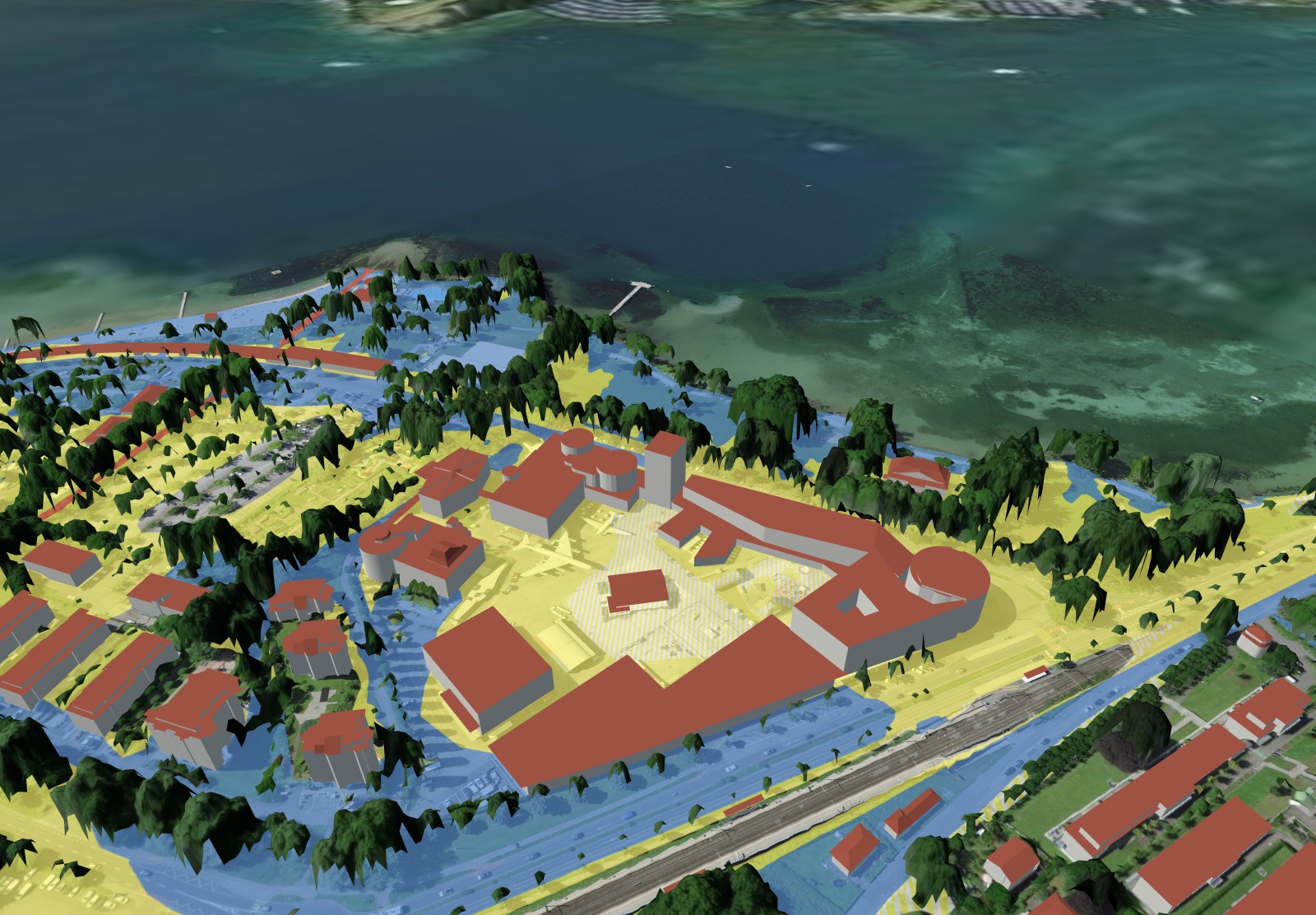
For the viewing, you get twenty minutes on an afternoon. Whether the balcony still gets sun in the evening, how loud the street is at night and how far it is to the bus — the report shows it from official data, for every address in Switzerland.
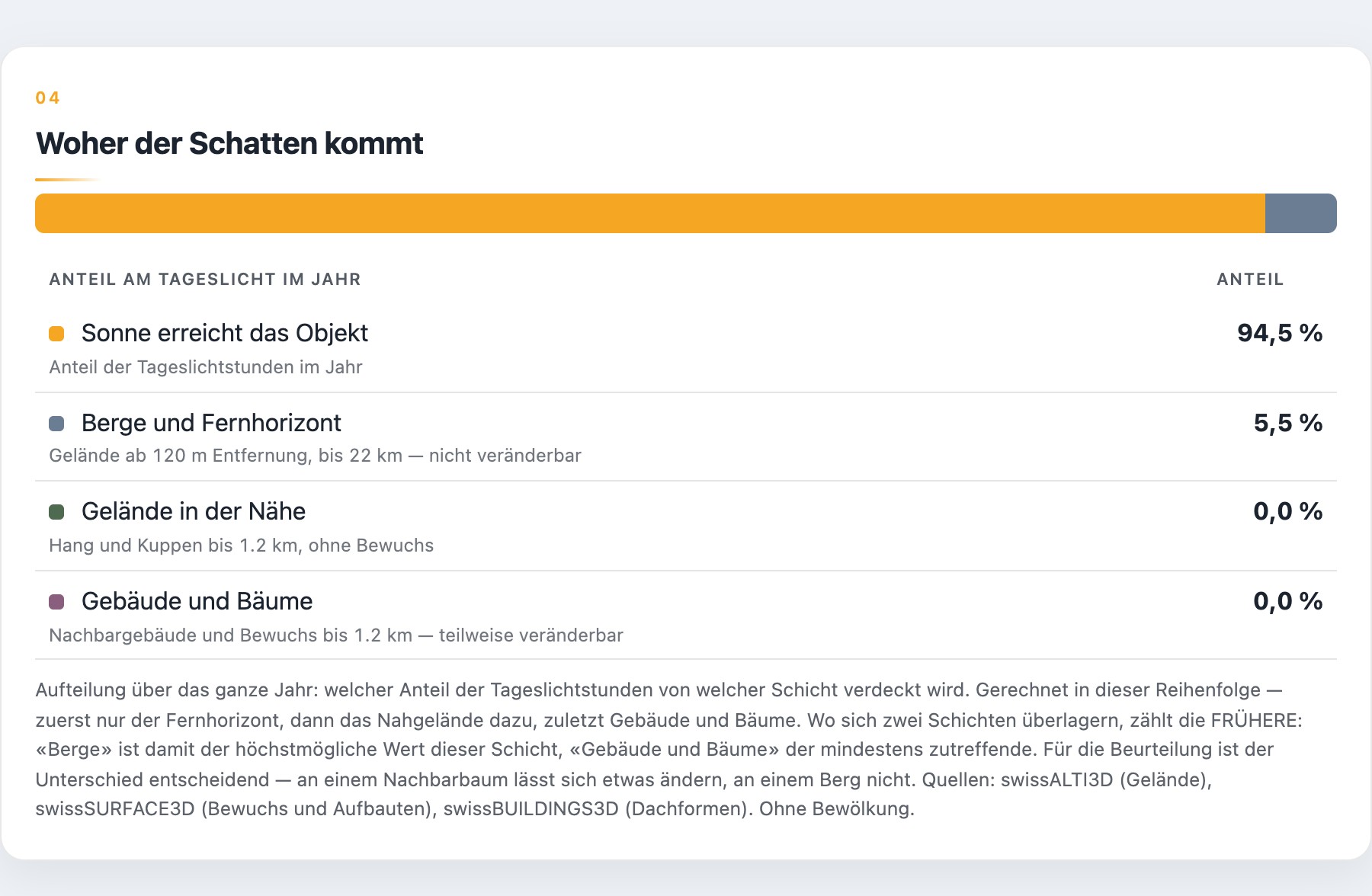
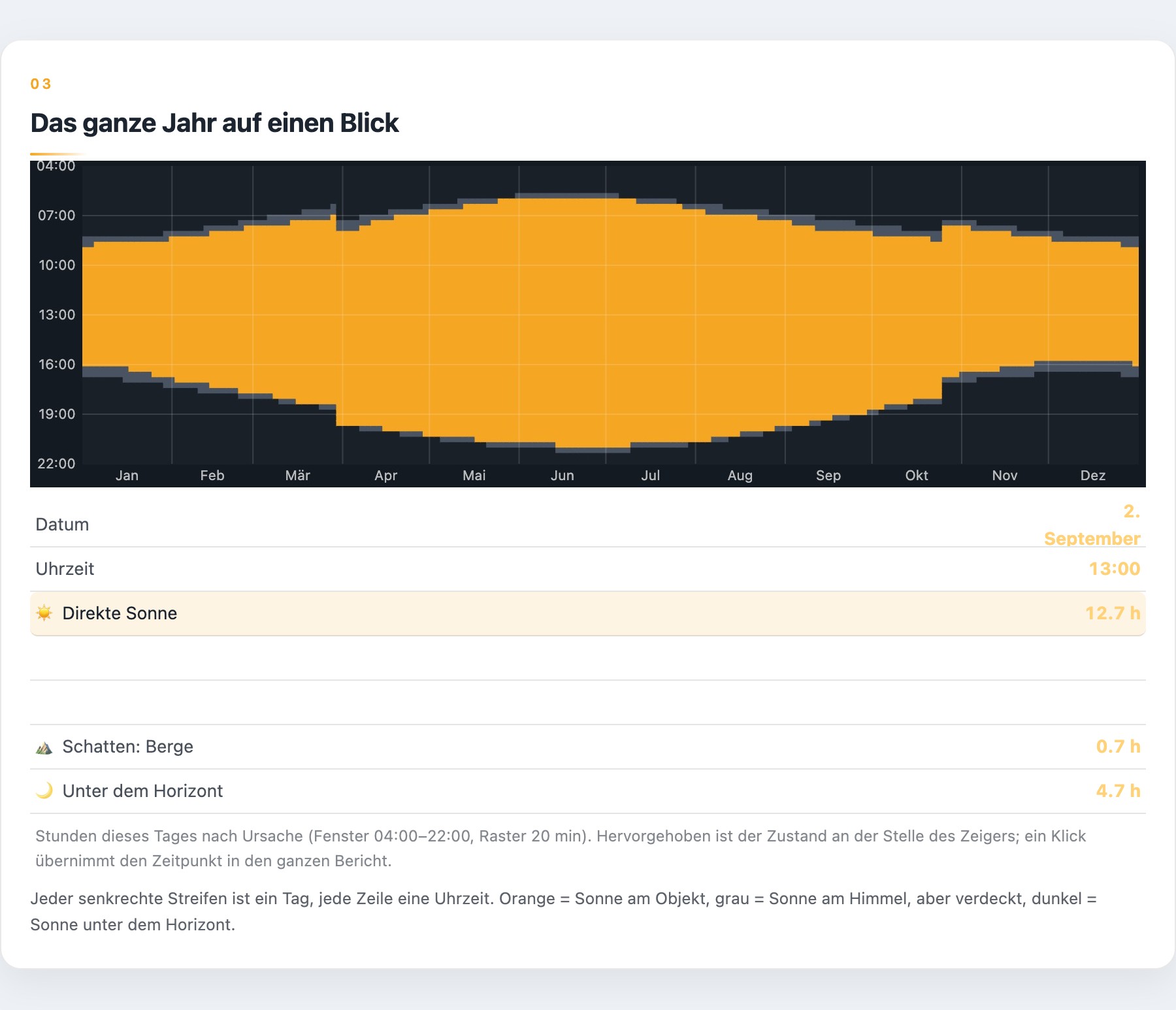
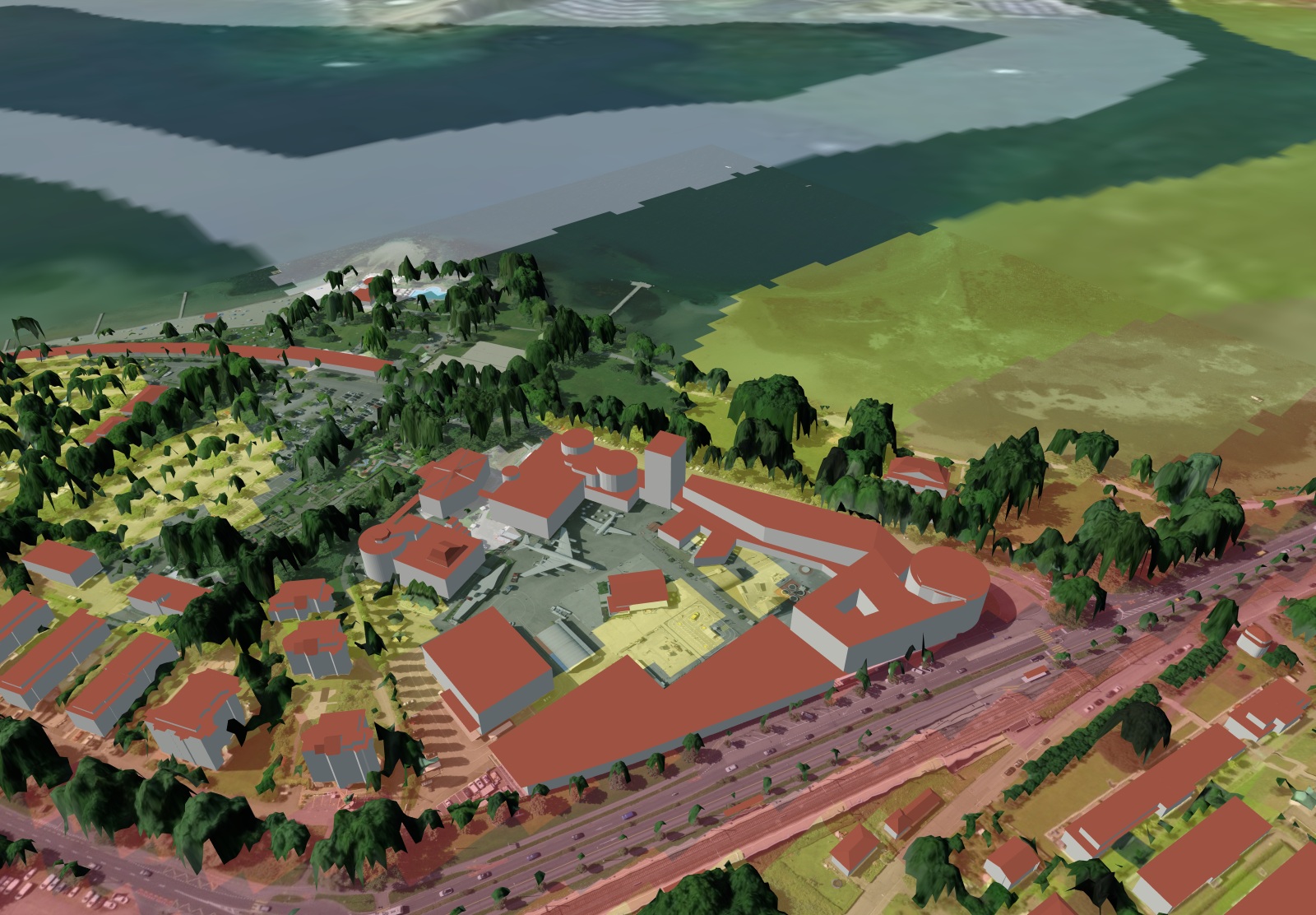
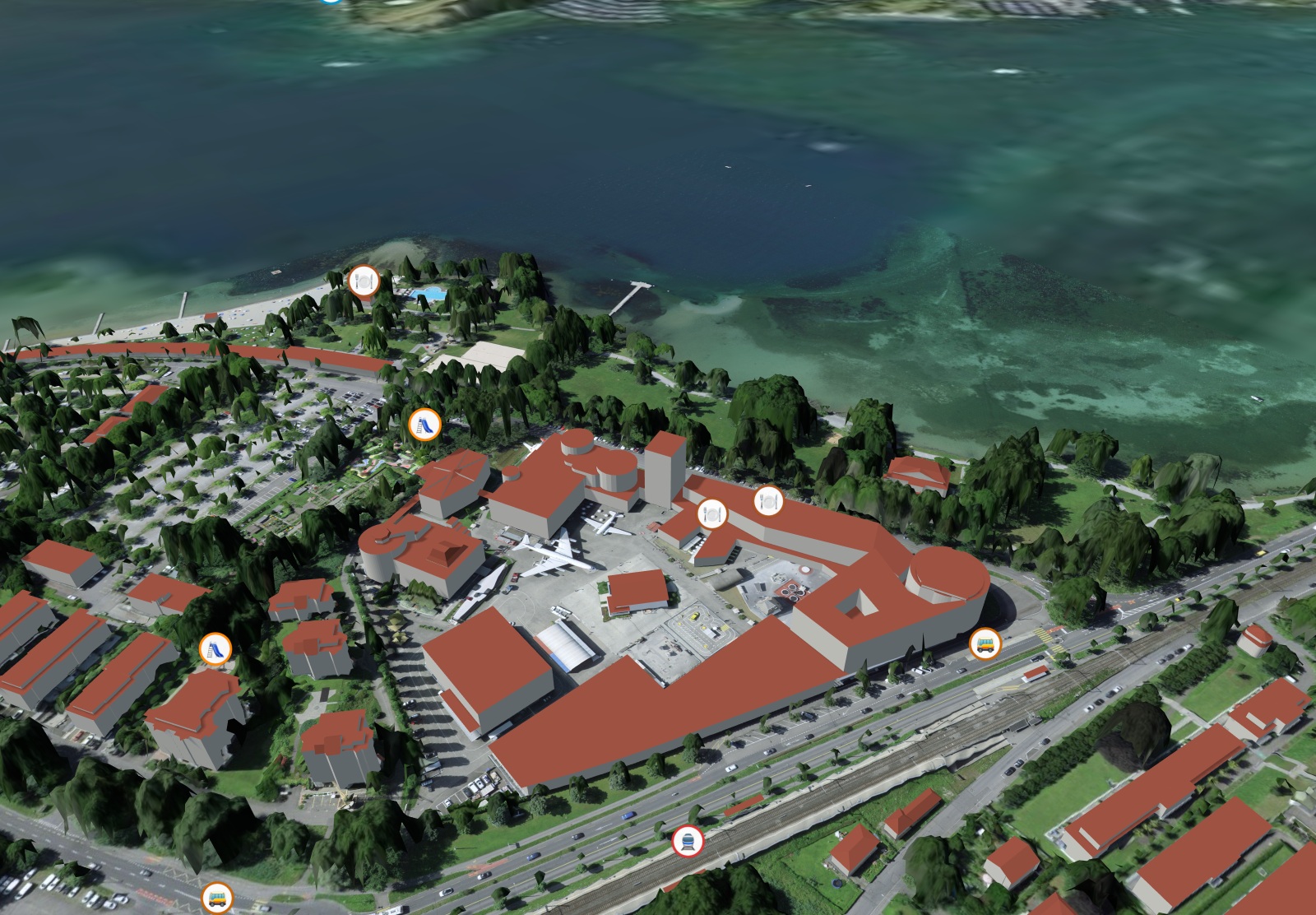
At the viewing, you see one afternoon. The report calculates the sun path for the whole year, every 10 minutes, with the neighbouring building opposite, the trees in front and the mountains behind. The 3D view shows at every hour which side of the house is in the sun; the hours-of-sunshine figures apply to a fixed measuring point on the roof.
How long the sun shines on the balcony or seating area after work, in June and in December, and from what time the neighbouring building takes it away. In the report, you can see the shadow moving across the house.
How many hours of sunshine the building gets on 21 December and whether the flat lies in the shadow of the slope or the neighbouring building throughout the winter. A summer day tells you nothing about that.
The view from every façade for the floor you choose: looking onto the street, courtyard, lake or rear building. Plus the panoramic view with the visible mountains.
It’s usually quiet during the viewing. The report shows road and railway noise by day and by night from the federal maps (FOEN), each with the limit value from the Noise Abatement Ordinance alongside. So you know whether you can leave the window open at night.
The value at the façade, compared with the legal limit value: in a residential zone it is 50 dB at night. With the window open, about this much gets in.
Freight trains run at night. The railway noise map shows how much of it reaches the address, separately for day and night.
Aircraft noise from the noise exposure cadastre, high-voltage power lines and facilities covered by the Major Accidents Ordinance in the surroundings, plus particulate matter and nitrogen dioxide as annual averages.
Everyday life decides whether a flat is right: the walk to the stop in the morning, the children’s way to school, the shopping after work. The report measures these routes from the house.
Federal quality class A to D (ARE) and the nearest stops with their departures, so you know how often the bus really runs.
Shopping, school, kindergarten, doctor, pharmacy, swimming pool, charging station and motorway junction, each with the distance from the house.
Broadband coverage, 5G coverage and the locations of mobile phone antennas (OFCOM), important for working from home.
Some things you only find out after moving in: the confusing junction in front of the house, the cellar that gets wet in heavy rain, the meadow opposite that is building land. The report shows it beforehand.
The ten nearest accidents with personal injury recorded by the police (FEDRO), with date and type of accident. So you can see where there have been crashes in recent years, for example on the way to school.
Cantonal hazard maps for flooding, landslide, avalanche and rockfall, where the canton releases them, plus surface runoff during heavy rain. Important for the ground floor, cellar and underground car park.
Building zones around the house, reported building projects nearby and historical aerial photos of the same spot: the meadow outside the window only stays if it isn’t building land.
No account, no app. The report opens in the browser on your phone, and you can share it with your family when deciding.
Payment with TWINT, card, Apple Pay or Google Pay.
3D model, hours of sunshine, all maps and the surroundings for exactly this address.
Usually within 24 hours. Open it on your phone, share it, save it as a file.
Calculated values from the sample report Lidostrasse 5 in Lucerne, on Lake Lucerne next to the Swiss Museum of Transport.
Put the SunPlot extract in your listing: documented sun exposure, noise and surroundings instead of “quiet, sunny location”. Subscriptions with your own logo from CHF 99 per month.
For professionals and property managers Single report · CHF 49