Why the viewing isn’t enough
A viewing lasts twenty minutes and takes place when it suits the property management: on a weekday afternoon or on a Saturday morning. The street is quiet then, the sun is high, and the neighbours are at work. Whether the flat is noisy at night, whether the balcony gets sun in winter and how long the walk to the bus really takes, you only find out after moving in. Tenants move more often than buyers, and every wrong decision costs another move, another deposit and more nerves.
The good news: most of this can be checked beforehand, with a second visit at the right time and with the official data that is available for every address in Switzerland.
The checklist for the second visit
- Go at the right time: once on a weekday at 17:00, when the rush-hour traffic is rolling, and once in the evening after 22:00. Even without an appointment, you can listen to the street in front of the building.
- Open the windows: during the viewing, open one window facing the street and one facing the courtyard. Glazing and shutters dampen the noise, but in summer you sleep with the window open.
- Walk around the area: railway line, main road, motorway, restaurant, bar, church, school, sports ground or businesses within earshot? What is quiet on a Sunday can be noisy during the week.
- Time the journeys: walk to the stop, the shops and the school and time how many minutes it takes. “Five minutes to the station” in a listing usually means by car.
- Floor and orientation: open a compass app and work out which way the living room and balcony façades face. What’s in front of them, how tall and how close?
- Look down: for a ground floor or cellar, ask whether water has ever got in. Look at the underground car park and the cellar compartment, not just the flat.
- Look ahead: building profile poles in the neighbourhood, vacant plots, a meadow opposite. Whether building is allowed there depends on the building zone.
- Ask the property management: about planned renovations, the last water damage and building projects in the neighbourhood.
What you can only learn from the data
Two visits give you a feeling, but not a figure. For the most important points, there are official maps from the Confederation and the cantons that are available for every address:
- Noise: The federal noise maps (FOEN) show road and railway noise for day and night. The Noise Abatement Ordinance sets a limit for this: in a residential zone it is 60 dB during the day and 50 dB at night. More in the guide on noise.
- Accidents: The Federal Roads Office (FEDRO) records every police-registered accident with personal injury, with location, date and type. This lets you see whether there are regular crashes at the junction in front of the building.
- Public transport: The Federal Office for Spatial Development (ARE) grades every location from A (station with frequent services) to D, based on how close the stops are and how frequent the services are.
- Natural hazards: The cantons keep hazard maps for flooding, landslides, avalanches and rockfall. In addition, there is the map of surface runoff during heavy rain, which shows where the water flows on the street and in the garden.
- Sun: From the terrain, buildings and trees in the official 3D data, it is possible to calculate for every floor when the sun arrives and where the shadow comes from.
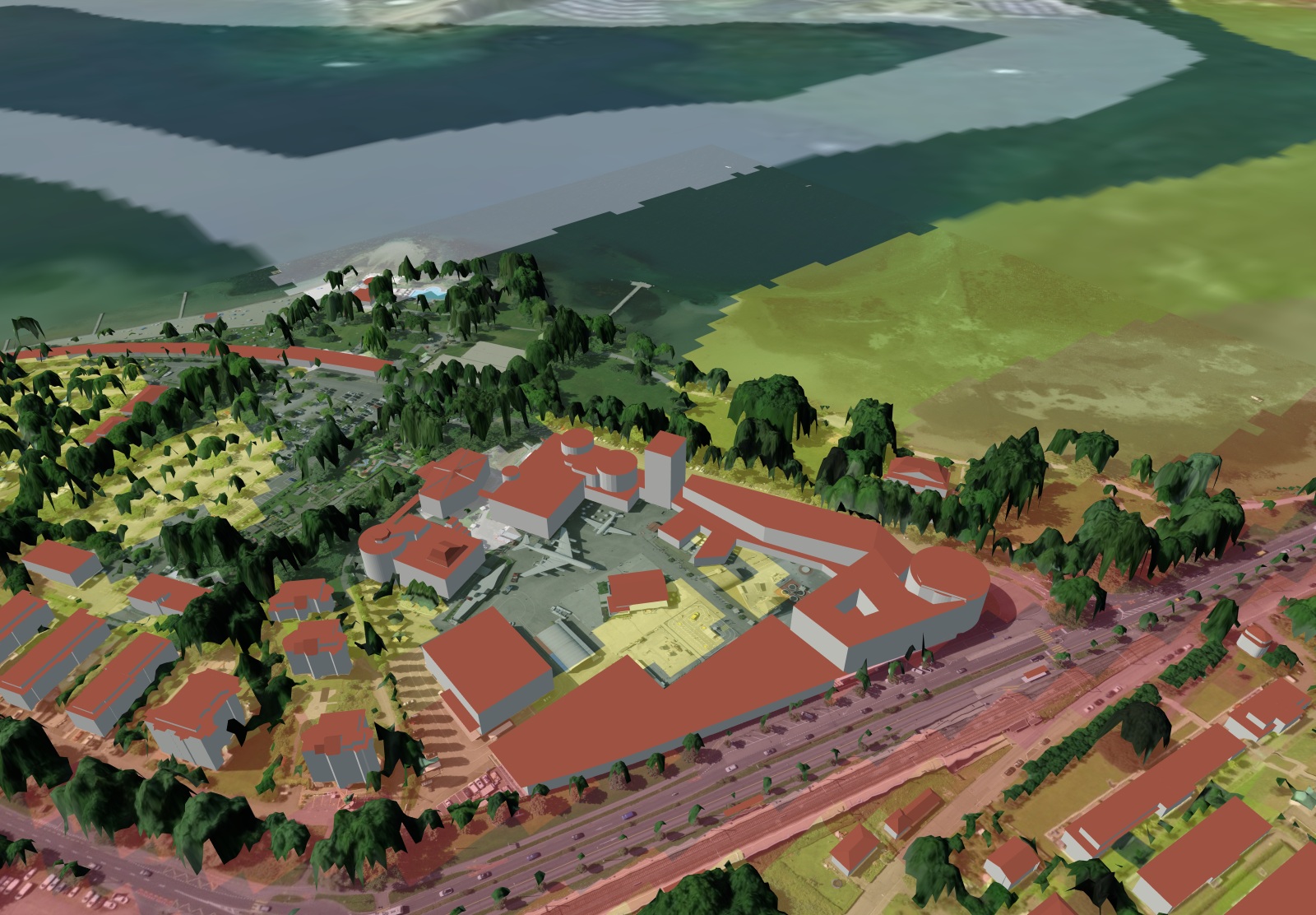
What the report shows
- Noise by day and night with the limit from the Noise Abatement Ordinance, air quality with nitrogen dioxide and particulate matter.
- The ten nearest accidents with personal injury, the public transport quality class and the nearest stops with departures.
- Shopping, school, doctor, swimming pool and motorway junction with distances, plus internet and mobile coverage.
- Natural hazards and surface runoff, building zones, time travel with historical aerial photos.
- Hours of sunshine for your floor, on the key dates and across the year, with the view from the façades.
Short answers
When should I view a flat?
Twice: once at the official appointment and once without an appointment at the critical time, i.e. on a weekday during rush hour or late in the evening. That’s when noise, the hunt for a parking space and the neighbourhood show themselves, not on a Saturday morning.
How do I find out whether a flat is noisy?
Open the windows, scan the surroundings for roads, railways, restaurants and businesses, and also look at the federal noise map for the address. It gives the level by day and night, which can be compared with the limit in the Noise Abatement Ordinance.
What does the report cost for a rented flat?
CHF 49 per address, one-off payment, no subscription. The link usually arrives by email within 24 hours and opens in the browser on your phone. Before ordering, you can check on the order page which maps are available for the address.